Bursa Beyond the Postcard: An Insider's Map to the City's Most Elevated Experiences
Bursa is not a city that announces its refinements loudly. Unlike Istanbul, which wears its cosmopolitan ambitions on its sleeve, Bursa tends toward a quieter form of distinction — the kind that requires some navigation to locate but proves far more satisfying once found. For the affluent American traveler accustomed to cities that perform their sophistication for visitors, this can initially read as austerity. It is not. It is simply a different grammar of luxury, one rooted in quality of material, depth of tradition, and the unhurried pace of a city that has never needed to compete for attention.
What follows is a curated map of Bursa's elevated offerings — the restaurants, accommodations, experiences, and neighborhoods that constitute the city at its best, assembled for the visitor who expects more than a surface-level encounter.
Where to Stay: Boutique Properties Over Chain Hotels
Bursa's luxury accommodation landscape has evolved considerably in recent years, with a cluster of boutique properties offering a more characterful alternative to the international chain hotels that dominate the city's commercial districts.
Kitap Evi (The Book House) in the historic Muradiye district is perhaps the most celebrated of these. Occupying a restored Ottoman-era residence, it offers twelve individually decorated rooms that blend period architectural details — carved wooden ceilings, hand-painted tiles, arched doorways — with contemporary comfort. The property's garden courtyard is one of the city's genuinely tranquil spaces, and its location adjacent to the Muradiye Mosque complex means guests wake to the sound of morning call to prayer rather than traffic.
For those who prefer a more contemporary aesthetic without sacrificing location, the upper floors of several Nilüfer district properties offer city-view suites with modern interiors and access to the neighborhood's upscale restaurant and café scene. Nilüfer functions as Bursa's equivalent of a progressive urban enclave — educated, secular-leaning, and home to a concentration of the city's professional class.
Dining With Intention: Beyond Iskender and Inegöl Köfte
Bursa's culinary identity is inescapably linked to two dishes: Iskender kebab, the layered lamb preparation drizzled with tomato sauce and browned butter that was invented here in the nineteenth century, and Inegöl köfte, the dense, spiced meatballs from a nearby town that have become a regional staple. Both are worth eating. Neither represents the ceiling of what Bursa's dining scene can offer.
Kebapçı İskender on Atatürk Caddesi is the original — founded by the dish's creator, still operated by his descendants, and still producing the definitive version of its namesake preparation. This is a mandatory meal, not a tourist trap. The distinction matters.
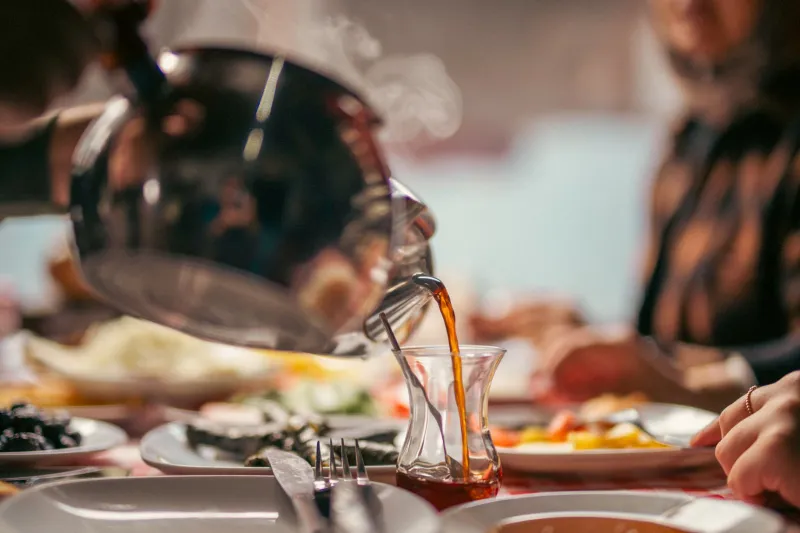
Beyond the canonical, Bursa has developed a serious contemporary dining scene concentrated in the Nilüfer and Osmangazi districts. Several chef-driven restaurants have emerged in recent years, drawing on Anatolian ingredient traditions while applying modern technique. Look for menus that feature local chestnuts (a Bursa specialty), fresh-caught fish from the Marmara Sea, and the region's exceptional dairy products — particularly the kaymak, a clotted cream preparation that accompanies almost every serious breakfast spread in the city.
For a premium experience with appropriate atmosphere, seek out restaurants in restored Ottoman structures in the Tophane neighborhood, where the combination of architectural setting and carefully sourced menus creates a dining environment that few cities anywhere in the world can match.
The Hammam as Luxury Experience
No visit to Bursa is complete without time in one of the city's historic thermal baths, and for the visitor accustomed to high-end spa experiences in cities like New York or Los Angeles, the traditional hammam offers something genuinely different — and in many respects superior.
Bursa sits atop significant geothermal activity, which has made its thermal waters famous since Roman times. The Çekirge district is the center of this tradition, home to a concentration of historic bath complexes fed by natural mineral springs. Several of these have been restored to accommodate contemporary visitors without sacrificing the essential experience: the marble-floored steam room, the ritual scrubbing and foam massage, and the extraordinary physical reset that follows.
The Kervansaray Termal Hotel in Çekirge offers a particularly well-managed hammam experience with private session options, making it appropriate for visitors who prefer a more exclusive arrangement. The hotel's broader thermal facilities — pools, steam rooms, treatment suites — constitute a half-day experience that represents excellent value relative to comparable spa offerings in major American cities.
Cultural Depth: Silk, Craft, and the Living Bazaar
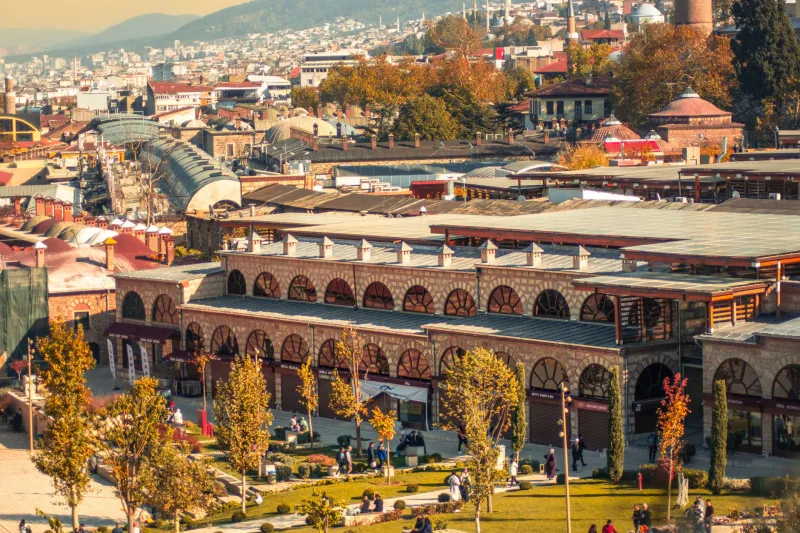
Bursa was for centuries the terminus of the Silk Road's western branch, and its relationship with silk production remains active rather than merely historical. The Koza Han (Cocoon Inn), a fifteenth-century caravanserai in the city center, still functions as the primary marketplace for Bursa's silk traders. Visiting during the silk cocoon auction season (late spring and early summer) offers a glimpse of a commercial tradition that has operated in essentially the same form for six hundred years.
For the visitor interested in acquiring authentic regional textiles, the Koza Han and surrounding covered bazaar provide access to handwoven silk scarves, embroidered tablecloths, and hand-painted ceramics that represent a category of quality unavailable in tourist shops. Engaging directly with artisan vendors — with patience and the rudimentary Turkish courtesy gestures described in our cultural guide — typically yields both better prices and more interesting pieces.
The Bursa City Museum, housed in a restored building near the old city walls, provides excellent contextual grounding for all of this — a well-curated collection that traces the city's Ottoman heritage, its role in Turkish national history, and the evolution of its distinctive craft traditions.
Evening in Bursa: Where the City Comes Alive After Dark
Bursa's evening culture is more restrained than Istanbul's but no less enjoyable for the visitor who approaches it on its own terms. The city's rooftop bars and upscale cocktail lounges are concentrated in the Nilüfer district and around the Zafer Plaza commercial area, offering well-executed drinks programs alongside views of the illuminated city and, on clear evenings, the snow-capped profile of Uludağ.
Live music venues featuring classical Turkish music — fasıl ensembles performing Ottoman-era compositions — operate several nights per week in the Tophane district. These performances offer a genuinely immersive cultural experience that bears no resemblance to the tourist-oriented folk shows that dominate Istanbul's entertainment landscape. The audience will be predominantly local, the music will be serious, and the evening will be long. This is entirely by design.
For visitors seeking companionship for any portion of their Bursa itinerary — a dinner partner, a cultural guide, or simply engaging company for an evening — Bursa Escort Rehberi's directory provides access to professional companions who are familiar with the city's elevated offerings and well-positioned to enhance any of the experiences described above.
The Mountain Above the City
No account of Bursa's premium experiences would be complete without Uludağ — the 8,300-foot peak that looms directly above the city and functions as both a winter ski resort and a summer hiking destination of genuine distinction.
The cable car from the Teferrüç district provides access to the mountain's mid-station, from which hiking trails extend through beech and oak forest toward the upper alpine zone. In winter, the resort area at the summit hosts Turkey's most prestigious ski facilities, attracting a clientele that includes Istanbul's professional elite and an increasing number of European visitors.
For the American traveler, Uludağ offers something rare: a world-class mountain environment that remains largely undiscovered by international tourism, with infrastructure that meets contemporary expectations without the overcrowding that has compromised similar destinations in the Alps or the American Rockies.
Bursa, understood correctly, is a city of exceptional depth. The visitor who takes the time to find its elevated register will leave with an experience that outlasts any postcard.